| Faculty |
|
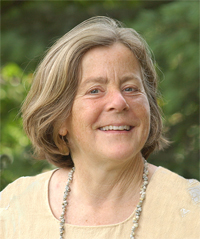
Catherine Badgley
|
Professor Catherine Badgley is an assistant professor in the Department of Ecology and Evolutionary Biology. She studies the ecology of fossil mammals and has conducted paleontological field work in Pakistan, China, Kenya and the western United States. Her research also includes studies of modern mammal biogeography. A long-standing interest in the modern biodiversity crisis led her to study the impacts of agriculture on biodiversity and then to evaluate alternative scenarios to the current food system. She is the immediate Past President of the Society of Vertebrate Paleontology, an international scientific organization.
|
|
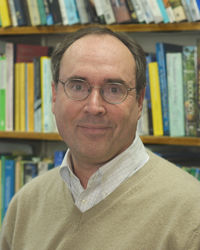
George Kling
Lead Faculty GC1 |
George Kling is a Professor in the Department of Ecology and Evolutionary Biology at the University of Michigan. He studies organisms, ecosystems, and biogeochemistry at the earth’s surface in relation to ecological and environmental problems including climate change. He works mainly in aquatic ecosystems from the Arctic to the tropics, and teaches classes in Global Change, Freshwater Ecology, and Ecosystem Ecology. |
Jamie Gleason |
Jamie Gleason is an Associate Research Scientist in the Department of Earth and Environmental Sciences at the University of Michigan. He conducts research within the broad area of isotope geochemistry, applied across a spectrum of disciplines including environmental biogeochemistry, paleoclimatology, paleoceanography, and planetary evolution. Current research projects include the history and evolution of the Arctic Ocean, isotopic tracers and nutrient cycling in forested ecosystems, and the environmental geochemistry of the element mercury. |
| |
|
back to Global Change home |